
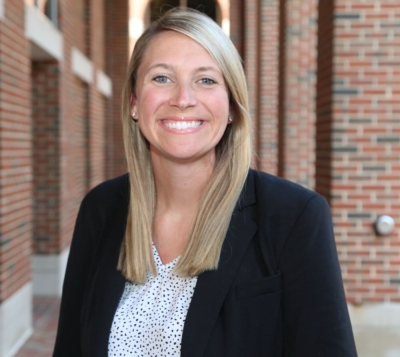
Ashley Sperry, University of North Carolina (Kenan-Flagler)
11) Didn’t Say ‘No’ Enough: “The one thing I would do differently is saying ‘no’ more often and being more intentional with my time. As someone who values teamwork and making an impact, I eagerly took on multiple leadership roles, mentorship opportunities and extracurricular commitments. While each experience was rewarding, there were moments when I stretched myself too thin, balancing coursework, leadership responsibilities and personal life—including being a single mother and an active-duty Army officer.
If I could do it again, I would be more selective about where I invested my energy, ensuring that I prioritized the experiences that aligned most with my long-term goals and personal well-being. Business school is full of incredible opportunities, but it’s also important to recognize that you can’t do everything—and that’s okay. Being more intentional with my time would have allowed me to deepen my impact in key areas while also making space for rest, reflection, and meaningful personal connections.”
Ashley Sperry, North Carolina (Kenan-Flagler)
“If I could do one thing differently in my MBA experience, it would be to prioritise earlier. In the first few months, I spent a lot of time gathering information, observing, and trying to balance everything—networking, social events, academics—while also working. I wanted to be open to opportunities and considerate of others, but ultimately, the MBA is an exercise in ruthless prioritisation. Looking back, I realise I should have made decisions based on my beliefs and goals sooner, rather than trying to accommodate everything. Learning to set clearer boundaries earlier would have allowed me to focus more effectively on what truly mattered to me.”
Fernanda Camilo Aguiar, London Business School

Robert Rickard, Vanderbilt University (Owen)
12) Spent More Time with Faculty: “One of Owen’s greatest strengths is its faculty, who are not only experts in their fields but also deeply invested in students’ success. Looking back, I regret not taking greater advantage of this. Caught up in coursework, recruiting, and daily demands, I often defaulted to learning within the structure of my courses rather than seeking deeper discussions. If I could do it again, I would engage more with professors outside of class, including pursuing independent studies with Josh White and Brian McCann to explore corporate financial policy and corporate strategy in greater depth. Beyond the subject matter, those experiences would have also helped me sharpen my ability to tackle complex problems and challenge assumptions. Additionally, this realization has reinforced my belief that the best learning comes not from passively absorbing information but from actively engaging with experts, and I intend to apply that lesson to my professional development moving forward.”
Robert Rickard, Vanderbilt University (Owen)
“My MBA was a whirlwind of cases, travels, and club events—but one area I didn’t invest more time in was having more unstructured conversations with faculty.
The great teachers are accelerators. At a school like mine—where faculty split time between boardrooms and classrooms—their perspectives aren’t just academic: they’re battle-tested. I realized too late that the “extra” 30 minutes after a lecture to discuss their own stories, or the casual coffee to debate their latest HBR article, would’ve added layers to my MBA ROI.
I’ve learned that growth isn’t just about absorbing content but curating a brain trust. In the second half of my MBA, I did look to actively schedule more “learning lunches and coffees” with a few professors—a habit I wish I’d built since the start of my MBA.”
Damian D’souza, IESE Business School

Ann C. Ukadike, UC Berkeley (Haas)
13) Taken More Classes Outside Business School: “[This is true], particularly at Berkeley Law and the Berkeley Language Center. Law courses would have deepened my understanding of corporate governance and compliance, while language studies would have strengthened my cross-cultural communication skills—essential for navigating global markets. Looking back, I see how these perspectives would have enriched my problem-solving approach and broadened my network.”
Ann C. Ukadike, UC Berkeley (Haas)
14) Trust the Process More: “If I could do one thing differently, I would worry less and focus more on embracing the process, trusting that everything would fall into place as I worked toward my goals. The pressure of finding an internship, combined with the fast-paced nature of the quarter system and the rigor of the more quantitative courses, can be overwhelming at times. Looking back, I realize that managing stress and maintaining a positive, flexible mindset would have allowed me to enjoy the journey more and avoid unnecessary self-doubt. Trusting the process and balancing my efforts across various priorities would have led to even greater growth and perspective.”
Skyler Meador, UC Irvine (Merage)
“Looking back on my MBA journey, the one thing I’d do differently is explore more interdisciplinary opportunities by taking additional classes across campus and possibly pursuing a dual degree with Heinz College. In hindsight, I realize the intersection between business and public policy is growing ever more critical, and Carnegie Mellon’s emphasis on collaborative, cross-functional learning would have been an excellent way to gain a broader perspective. Engaging more deeply with public policy coursework could have sharpened my understanding of how regulations, social issues, and organizational strategies converge. This would have not only enriched my academic experience, but also positioned me to tackle complex challenges that straddle the realms of both business and government.”
Maressa Guynn, Carnegie Mellon (Tepper)

Beatriz Marqui Monreal, IMD Business School
15) Embraced Discomfort Sooner: “The biggest growth moments came from stepping out of my comfort zone, and I wish I had done it even more from the start.”
Beatriz Marqui Monreal, IMD Business School
“Last summer, I lived with a fellow classmate, Sarah. We had so much fun living together and have maintained our friendship throughout second year. Since we occupy different circles at Wharton, I don’t know if we would have crossed paths had we not randomly become roommates. So, when I look back on my time at Wharton, I wonder how many connections I may have missed. Wharton is a big school and there just isn’t enough time to meet everyone. One thing I might have done differently is picked up random hobbies like volleyball, pickleball, art, or cooking, and gone to events around those activities to increase the chances of crossing paths with new people and forming more unexpected friendships.”
Kaitlyn Williams, Wharton School
16) Overthought Too Many Decisions: “One thing that I’d do differently is hesitate less. There were moments when I overanalyzed decisions—whether it was stepping into a leadership role, signing up for a competition, or putting myself out there for networking opportunities. Some of that hesitation stemmed from my imposter syndrome, that ever-present feeling of wondering if I really belong. Other times, I held back because I worried about overstepping or assumed someone else was better suited for the opportunity. But in the moments when I pushed past that hesitation, I found that those experiences were the most rewarding—whether through personal growth, meaningful connections, or unexpected opportunities. If I could do it over again, I would remind myself that business school experience is rare; it provides us a low-risk environment to take chances, fail, and learn. If I could, I’d go back and make decisions more quickly and with more confidence. I’d also worry less about what others think, and trust that I have just as much to contribute as anyone else.”
Via Rao, University of Minnesota (Carlson)
17) Audit More Electives: “We had this rare opportunity to sit-in on almost any elective – no submissions, no pressure of performance – just pure learning. But I took the lazy way out and only attended the courses I’d signed-up for. Meanwhile, some of my classmates spent hours curating their list of electives to audit and got so much more out of it. Something I missed for sure.”
Aashruth Rangarajan, IIM Ahmedabad

Arjun Shivach, HEC Paris
18) Tapped Into the Local Business Ecosystem Sooner: “If I could go back, I would have engaged more actively with the French business ecosystem earlier to strengthen my post-MBA opportunities. HEC Paris provides incredible access to top European firms across industries. While I took advantage of networking events and industry collaborations, I realized later that building strong local connections takes time. Many of my peers who started engaging with French companies early through internships, networking, and language immersion found it easier to transition into post-MBA roles within France and Europe.
Despite my background in maritime and sustainability, sectors where France has strong corporate players, I initially focused on broader global opportunities. However, since my long-term goal is to work in Europe, I now see how an earlier focus on leveraging HEC’s alumni network, attending more industry-specific events in Paris, and improving my French language skills could have positioned me more strategically. The biggest takeaway for future students is clear: the sooner you immerse yourself in the local business landscape, the easier it becomes to navigate post-MBA career opportunities, especially in competitive job markets.”
Arjun Shivach, HEC Paris
19) Spend More Time In School: “I should have taken my course advisor’s advice to stretch my dual-degree program over 2.5 years instead of completing it in 2 years. Juggling coursework, projects, assignments, networking, recruiting, and social events all at once was a lot. While I successfully managed to stay on track academically and professionally, I know my social life suffered as a result. Smith has such a vibrant community, and there were times I had to choose deadlines over happy hours, networking mixers, or even just casual bonding moments with my classmates. If I had taken a bit more time, I believe I could have been more present for those experiences that make the MBA journey truly special. That said, the experience taught me invaluable lessons about time management, prioritization and work-life balance—skills I’ll carry with me beyond business school.”
Olawale Solarin, University of Maryland (Smith)
20) Been More Open to New Experiences: “I would not have developed the expectations I had set for myself in my first year. It was a mix of imposter syndrome, comparing myself to others, and only having one vision of how I wanted my business school, and recruiting experience to go. The fact is, the only person who you should compare yourself to is the person you were yesterday, and I wish I had learned that sooner. However, I have spent my second year far calmer and at peace and enjoying every day instead of feeling anxious when things were going in different directions than I thought they would! Business school is such a huge growing experience professionally and personally. You will learn things about yourself that you had never considered before and may graduate following a different path than you thought you would two years ago!”
Anna Batty, Vanderbilt University (Owen)
DON’T MISS:
100 BEST & BRIGHTEST MBAS: CLASS OF 2025
The post 20 Biggest Regrets Of MBA Graduates appeared first on Poets&Quants.