
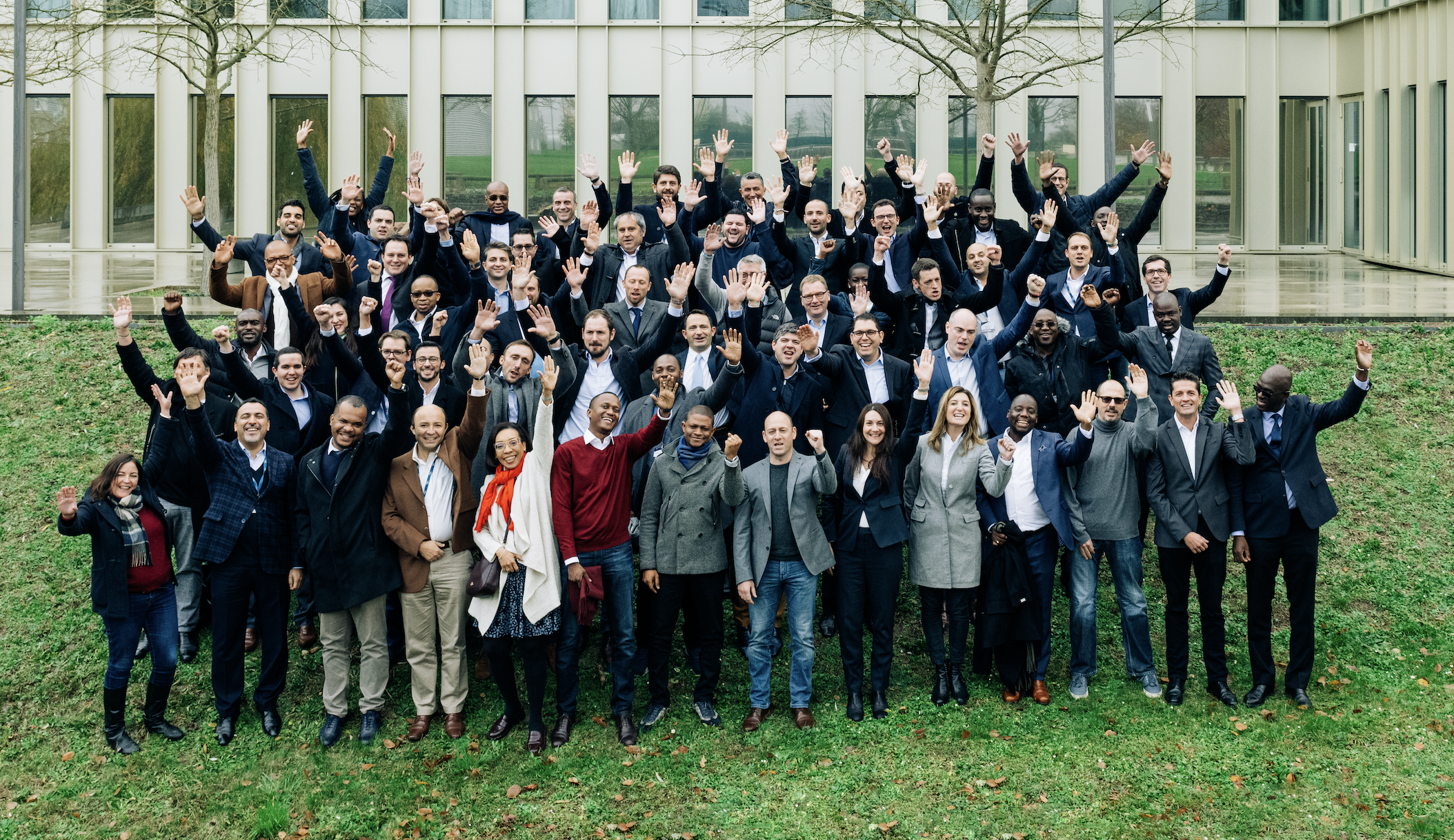
Group of HEC Paris students, courtesy of Francois Carle
HEC PARIS
In the 1990s, the safest bet was investing in a shopping mall. You could find everything in one place – merchandise, food, movies – and it was the perfect spot to socialize. By 2026, many malls have shuttered. Turns out, you could order the same things over Amazon, DoorDash, and Netflix. With social media, people don’t even need to leave their pajamas to meet up.
That’s what makes HEC Paris investment in a €230 million “Campus of the Future” so striking. For many, brick-and-mortar is dead. Education will eventually head online for the same convenience that hollowed out shopping malls. At HEC Paris, leadership is committing to dying model to their next fifty years. While many campuses are renovating space for studios, HEC Paris will be constructing new buildings at its Jouy-en-Josas campus. Is this a Quixotic quest…or a bet that what truly matters in education can’t be confined to a laptop screen.
Call it a zig when the rest of the world is rushing to zag. No doubt, that is something to watch carefully. After all – fifty years ago – there were no cell phones, internet, GPS, personal computers, digital currency, or electric cars. How can a school possibly know what the world will be like in 2076?
LOOKING BEYOND THE NEXT ADMISSIONS CYCLE
The school frames the “Campus of the Future” as less of construction project and more of a “promise,” in the words of HEC Paris Dean Éloïc Peyrache. “[It is] a promise to future generations: to offer a place where academic excellence, environmental responsibility, modernity and openness come together. A place to learn, to elevate ambitions, and to make a meaningful impact on the world.”
According to the school, the project will break ground at the end of the year, with completion expected in 2031 – the school’s 150-year anniversary. It revolves around four strategic goals. First, the school is creating a centralized hub for interdisciplinary research and collaboration. Second, HEC Paris is looking to incorporate more hybrid classrooms and flexible workspaces to better foster collaboration. At the same time, residences will be designed to foster diversity and dialogue. Finally, sustainability will be front-and-center in every building. In total, the project will cover 40,000 square meters, including a full renovation of the academic building.
This campus revitalization is part of a larger movement at HEC Paris. That starts with the New Responsibilities Strategy, a five-year drive that hopes to raise €300 million for the HEC Foundation. A third of the money will be allocated to the campus “reinvention.” The rest, however, will be divvyed out to a series of projects. For example, the school will form an HEC Institute, which will bring together all of its centers – including AI, leadership, and sustainability – under one roof. In terms of outreach, HEC Paris will launch its HEC Media Hub later this year, where audiences can access school research and ideas in formats like podcasts and stories.
As a whole, the New Responsibilities Strategy positions HEC Paris as a leading voice in commerce beyond campus, says Jean-François Palus, president of the HEC Foundation, in a news release.
“Over the past 20 years, the HEC Foundation has laid solid groundwork and accelerated the school’s transformations. “Our new fund-raising campaign…will enable us to give HEC Paris the means to fully achieve its mission: informing the great debates of our era and inspiring decision-makers, reshaping the destinies not only of our students, but of many other talented individuals with incredible potential, encouraging entrepreneurial spirit and co-creating solutions to the major challenges we face – all within a campus that has been completely revamped for the next 50 years.”
A HUMAN-CENTERED CURRICULUM
All of this comes on the heels of HEC Paris raising €213 million from 2019-2023 as part of its Impact Tomorrow campaign. Along with heavily funding scholarships, the campaign also supported the development of Hi! Paris. A partnership between HEC Paris and the Institut Polytechnique de Paris, Hi! Paris is a center focused on spurring innovation in artificial intelligence and data analytics. A hub for research and educational programs, the center brings together students, researchers and executives, with outreach that includes supporting startups in the field and hosting events like discussion panels and research presentations. At the same time, the Tomorrow Campaign funds research and case study development, particularly in ESG.
Such efforts have proven invaluable to one of HEC Paris’ biggest ambitions. While the school is readying its campus facelift, it has also been remodeling its curriculum. More than just adding courses in emerging areas, the school opted to something more revolutionary.
Most of that time wasn’t spent talking about what content we wanted to display,” explains Brad Harris, Dean of MBA Programs, in a 2025 interview with P&Q. “It was, ‘How do we design an architecture that allows us to do what we want now, but also be more agile?’ Because I’m certain tech and AI aren’t the last things that will require us to change.”
While the school will maintain its signature specializations, it has added transversal concentrations in Sustainability and Tech and AI to run “parallel” to these tracks. Along with adding AI electives, it has been equally conscientious about incorporating AI-related themes, tools, and exercises across the curriculum. For example, AI programming is introduced in the core Data Science Camp offering. With AI gaining increased attention in the curriculum, HEC Paris has added another layer of ethics training so students can better understand the implications of the technology – and their responsibilities as future decision-makers.
In other words, beyond equipping students with technical know-how, the school hopes to infuse them a more human touch, says Harris. “We want employers to say HEC graduates get it. They are future-ready, but they have not lost their humanity.”
In fact, this ‘human’ element is a distinct part of the school’s identity, Harris continues in a later interview in 2025. “We know (and embrace!) that the HEC Paris MBA is a distinctly human experience. To tap into these elements, we offer creative electives, like Art and Leadership, and intercultural workshops that broaden perspectives and spark reflection. And, because we’re a focused business school unlike traditional 4-year universities in other countries, our students benefit from a rich network of global partners, giving them opportunities to experience distinct liberal arts content and round out their journey in ways that make them thoughtful, well-rounded leaders.”

MBA Graduation
‘THE CRADLE OF LEADERSHIP’
HEC Paris has Long known for its 16-month MBA program, which enables students to incur less debt and return to work sooner without sacrificing an internship or electives. In 2025, the school offered further flexibility with an Accelerated 1-Year MBA. By the same token, HEC Paris also implemented a new vehicle to expose students to more topics and late-breaking development.
“In the past year, we have also introduced intensive courses (3-day courses) and certifications (1-2 days) for our MBA and EMBA students,” explains Dean Harris in a 2024 interview. “[These] address professional and industry specific skills and cover a range of topics, from blockchain and fundraising to leadership and investing. Afterskills Certifications cover topics such as data & AI. The latest intensive courses included Design, Management & Strategy, Family Business, Search Funds & Entrepreneurial Acquisitions, and Industrial Decarbonization.”
Home to over 80,000 graduates across 150 countries, HEC Paris has been referred to as “the cradle of leadership.” Its alumni roll includes Pascal Soriot, CEO of AstraZeneca, though graduates have run firms as different as Best Buy, Instacart, Michelin, L’Oréal, Schlumberger, Biogen, BNP Paribus, Capgemini, and Danone in recent years. One reason for this wealth of leadership talent: HEC Paris MBAs have plenty of opportunities to practice it.
Take the MBAT – also known as the MBA Olympics. Held on campus, the event is organized by HEC Paris students each May. That includes organizing 30-40 events for up to 1,500 student competitors, with responsibilities including budgeting, logistics, and hospitality. Another HEC Paris staple is the Outdoor Leadership Seminar, which is supervised by French military officers. Over two days, MBA teams complete timed exercises such as building a raft to cross a waterway or repelling from a roof outdoors. In the end, the seminar tests how students can bring out each other strengths and operate amid adversity, particularly in situations where they must devise a plan in unfamiliar situations and unforgiving elements.
For Vernice Arahan, a ’23 alum, these exercises show students exactly where they excel…and where they fall short. This self-awareness is exactly what they need to succeed. “When you think about the best leaders in the world, you often find that their skills were honed under duress and in overcoming crisis,” Arahan observes. “While the best in the business could have the natural talent and charisma to pull it off, for the majority of those who enter the C-suite and take lead of a major organization, it often takes practice and many “trials-by-fire” to become great managers and leaders. In the stress of the moment and through overcoming the challenges of the day, you are forced to step up and be the leader who you need to be more, which often is more than the leader you think you can be. In a special way, the outdoor leadership seminar presented a thorough opportunity to test participants’ limits as individuals, team members, and, most especially, team leaders.”
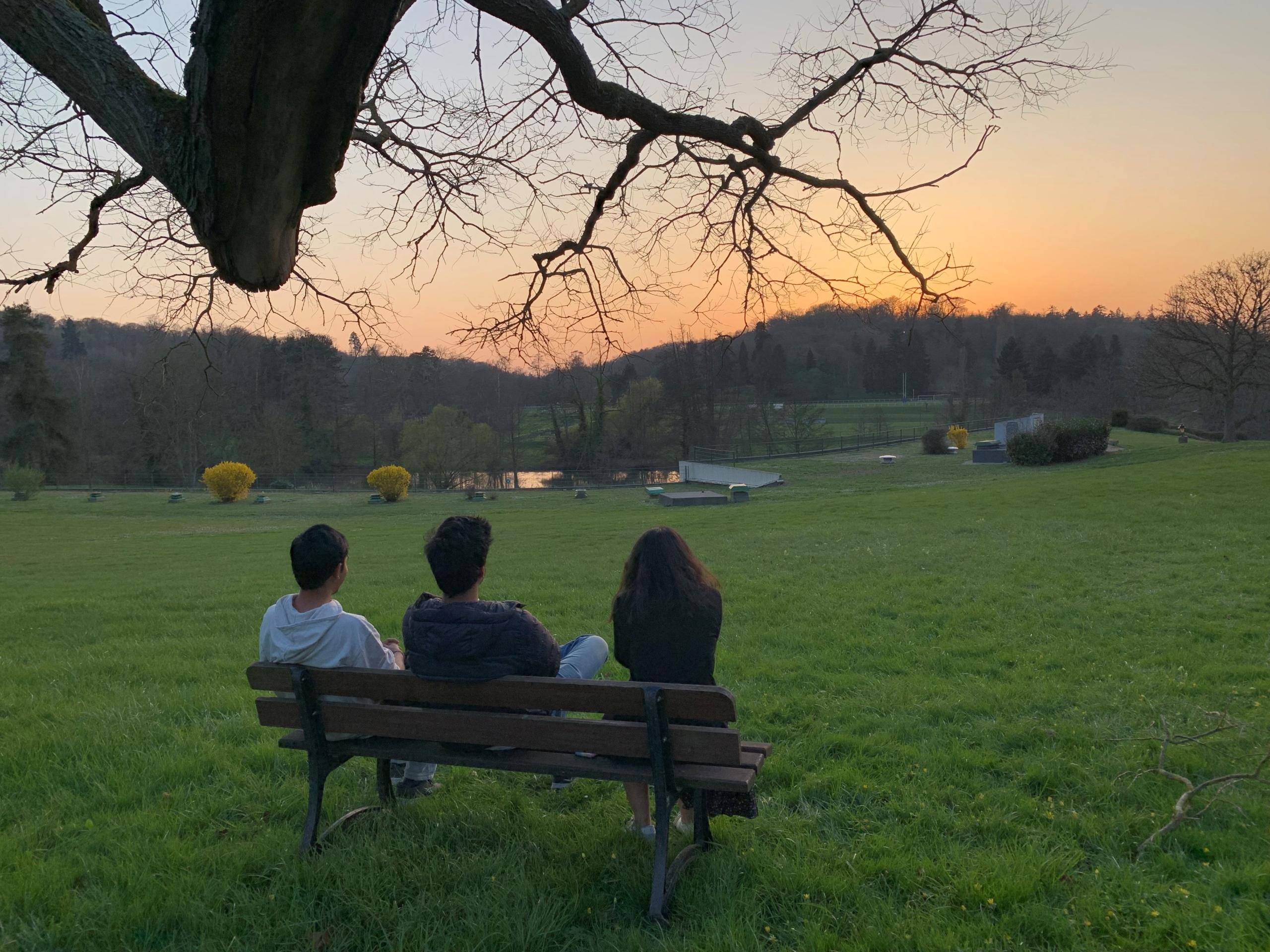
Many of our MBA students choose to live on our 340-acre wooded campus. Sunny weekends are often spent lakeside, while students also take advantage of our recreation center, tree-lined running paths through the forest and athletic fields.
THE BIGGEST ADVANTAGE: THE CAMPUS
Among MBA students, the school is sometimes described as “HEC (Almost) Paris.” Indeed “Paris” is a bit of a misnomer. Reality is, Jouy-en-Josas is 45 minutes from Paris. Still, you won’t hear students complain much. After all, the campus is truly the heart of the school…not Paris. Yes, the campus’ location enables MBAs to tap into Paris’ Fortune 500 might and bustling startup ecosystem. On weekends, students can always shop along Champs-Élysées or take moonlight strolls along the Seine. In the end, students retreat back to the comfort of Jouy-en-Josas campus – the same one that HEC Paris is devoting so much time to rebuilding.
“This campus is one of the things that differentiates us the most from other top MBA schools, writes ’24 Victor Heaulme, a 2024 graduate. “This campus is one of the things that differentiates us the most from other top MBA schools. Dorms, a forest, a lake, three football fields, a rugby field, an actual French Chateau… these are all things few other schools can boast. During MBAT, countless students came up to us to tell us how lucky we were to have such a beautiful, green campus, etc… things we take for granted on a daily basis!”
“The fact that HEC is located in a small town makes the relationships between the students stronger,” adds Heaulme’s classmate Arthur Castelo Branco. “Most people live on campus, and all the parties and events also happen there. This creates a very special bond between everyone in the cohort, hence the famous collaborative aspect of the HEC community.”
Next Page: University of North Carolina, Kenan-Flagler Business School