

HIM Business School in Switzerland
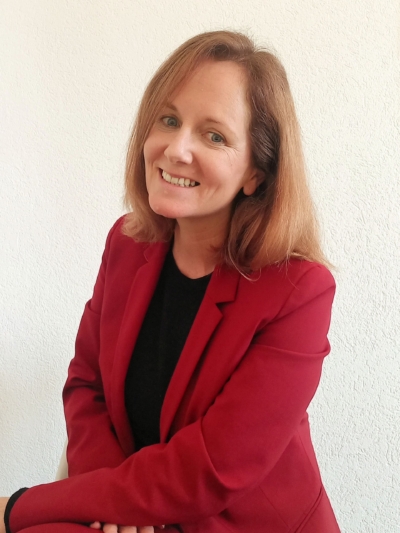
Claire Jollain
Dean of HIM Business School in Switzerland
“Most gender parity efforts feel like photo ops—box-checking for PR rather than meaningful change. Few grasp that diversity is a powerful accelerator for innovation and productivity. Without true understanding and commitment, parity is just surface-deep optics.”
With master’s degrees in education and marketing, Claire Jollain has built her career on a foundation of academic excellence and practical industry experience spanning marketing, management, and entrepreneurship across multiple sectors, including automotive and luxury industries. She has successfully repositioned HIM as a customer-focused business school, pioneering the application of hospitality education’s renowned hands-on, skills-based methodology to business education.
From your perspective, what has driven the increase in women deans, and what still limits progress? The rise in women deans is a positive signal of shifting mindsets in higher education leadership. However, the pace feels slow when compared to the percentage of female students enrolled in business programs globally—where we’re seeing nearly 42% or higher in many schools today. What slows progress is the colossal size and complexity of universities; turning this large ship takes time. I’m genuinely curious whether smaller institutions see a higher share of female deans than the big ones. Something tells me the agility of smaller schools lends itself better to quicker change.
‘Forget sweeping reforms. Awareness and leading by example move the needle. People don’t change because of policy; they change when they witness authentic leadership and lived values. The real work is in action, not grand declarations.’
Women often reach the deanship through later than their male counterparts. What barriers to advancement do you still see for women aiming for top leadership roles in business schools? The tired cliché is that women hold themselves back, doubting their ability to juggle family and leadership. Frankly, I’m fed up with blaming women for this. Statistically, women outnumber men globally—so where’s the logic in women not leading more? The glaring imbalance isn’t about personal choice; it’s systemic inertia. Women shouldn’t have to apologize or justify their ambition.
Once women reach the deanship, what challenges tend to persist? Early on, I was told to be cold and twice as tough as any man. I rejected that. Today, I lead with warmth, vulnerability, and strength. Leadership isn’t about authority alone—it’s about emotional connection. People follow those they relate to. If anything, emotional intelligence beats cold authority every single time.
How do you assess whether progress on gender parity in leadership is substantive rather than symbolic? Gender parity isn’t my daily goal. I focus on skills, growth potential, and leadership capability. I promote based on merit, not gender. That said, I do make a point to encourage women to be louder, to stand out. Men are naturally better at self-promotion, and that gap must be closed for real equity.
How does greater representation of women in business school leadership matter for students? I’m unapologetically feminist and make International Women’s Day a major, highly visible event. But progress is a shared responsibility—men and women must act. Female leaders set examples, but young men need to become advocates, especially when lacking role models. Building allies is non-negotiable.
Describe the programs, initiatives, or institutional practices your school has put in place to advance gender parity: We haven’t launched formal programs. Change here comes from culture and awareness rather than top-down schemes. Real progress is organic, rooted in daily behavior and leadership example, not just HR initiatives.
Do you believe women bring distinct strengths to academic leadership? Women excel at multitasking and navigating pressure while maintaining a nurturing environment. Their focus on others’ well-being instead of just themselves is critical in turbulent times. When the storm hits, caring for the crew keeps the ship afloat.
Looking ahead, what changes would most meaningfully move the share of female deans beyond today’s 30%? Which reforms are overdue? Forget sweeping reforms. Awareness and leading by example move the needle. People don’t change because of policy; they change when they witness authentic leadership and lived values. The real work is in action, not grand declarations.
Next page: Federica Pazzaglia, Director of UCD Michael Smurfit Graduate Business School in Ireland