
THE NEXT GENERATION OF BIG THINKERS
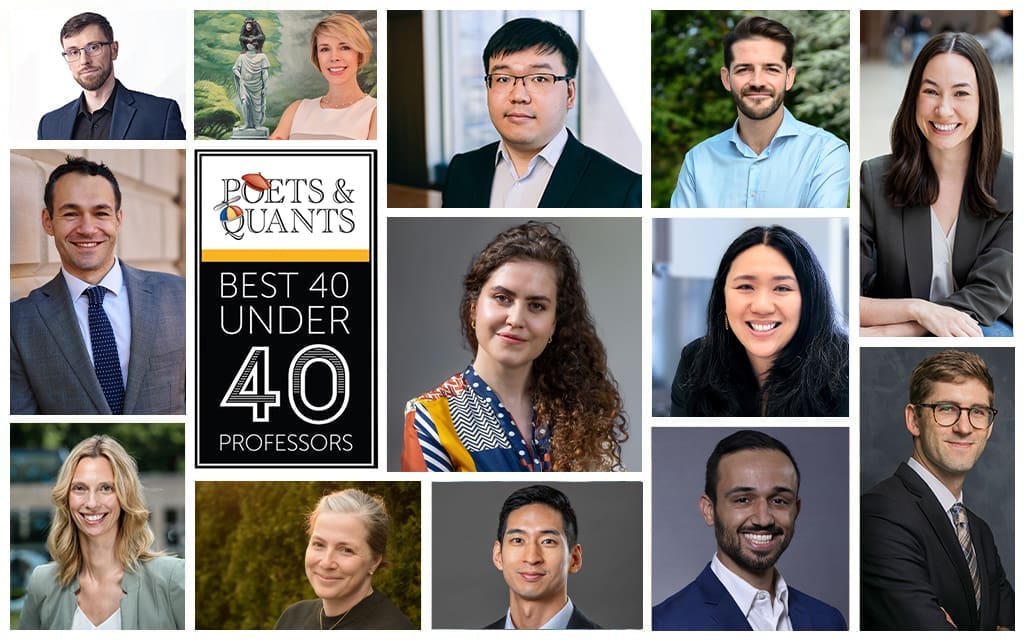
Many of this year’s professors are asking big questions: How do fragile governments build trust? How do massive infrastructure projects survive decades of political shifts, competing interests, and institutional friction? Can clean energy policies accelerate climate progress without backfiring economically?
Jonathan Weigel, Assistant Professor of Business and Public Policy at Berkeley Haas, examines how fragile states can build fiscal capacity. He has spent more than a decade working alongside provincial tax authorities in the Democratic Republic of Congo, one of the poorest and unstable urban regions in the world.
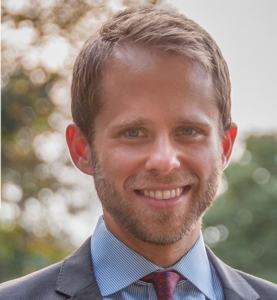 There, he founded ODEKA, a nonprofit research lab that now employs roughly 100 staff and contractors working closely with the Congolese government. The lab helped build the government’s first city-wide database of property values in Kananga, a city of 1.6 million, using drone imagery, AI-assisted rooftop detection, and field surveys covering all 135,000 city properties.
Data showed that progressive property taxes raised more revenue while shifting more of the burden away from poorer residents.
“I do research in places where not many business professors work. But with extreme poverty increasingly concentrated in fragile states, I don’t think we can afford to neglect these countries,” Weigel says. “I find running ODEKA—working with and learning from my Congolese partners—to be the most rewarding part of my job.”
At Oxford Saïd Business School, Rehema Msulwa, 38, studies how major projects maintain momentum over decades, even as government changes, public opposition grows, and priorities shift. One of her recent papers used London’s Thames Tideway project as a case study for how large-scale infrastructure programs can alter governance systems, change organizational behavior, and influence how future projects are delivered long after construction ends.
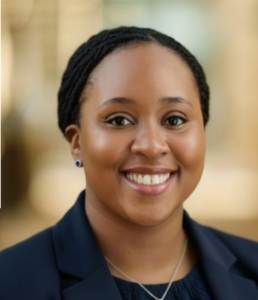 “What I’ve found is that progress is not simply the result of good planning or strong leadership,” says Msulwa, Associate Professor of Major Programme Management. “Rather, it is continually rebuilt through the ways organisations coordinate, negotiate, and make decisions.”
And, at Cornell University, Todd Gerarden, 39, studies how firms, consumers, and governments shape the shift toward renewable energy. His recent work studied the effects of U.S. tariffs on the import of Chinese solar panels, tracing the consequences not only for firms and consumers, but also for environmental outcomes.
“The most surprising thing we learned is that while tariffs were harmful to the U.S., a domestic manufacturing subsidy could improve both U.S. and global economic outcomes, because of the environmental benefits of more solar deployment,” he says.
THE POETS AND THE QUANTS
At Poets&Quants, we of course celebrate the quantitative thinkers solving difficult problems with data, rigorous frameworks, and analytical precision. Our 2026 list has many pioneering quants.
We also hold a special place in our hearts for the storytellers, the explorers, and the endlessly curious. This list has plenty of poets, too.
Take Charleen “Charlie” Case, 38, Assistant Professor of Management and Human Resources at HEC Paris.
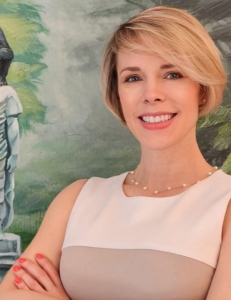
As a first-generation college student, Case became fascinated by the invisible ways people navigate status, competition, and influence. That curiosity eventually carried her through social psychology, primatology fieldwork in the Amazon, and comparative neuroanatomy research before she landed, somewhat unexpectedly, inside a business school.
Outside work, however, her curiosity shifts to urban wildlife. She volunteered rehabilitating injured raccoons and opossums when she lived in the United States. She hasn’t yet found a similar outlet living in Paris, so she now takes early morning safaris through the city.
“At dawn, Paris belongs only to me, the magpies, the pigeons, and the rats who scurry off with a forgotten frite or some such treasure,” she says. “I find them all delightful.”
Jake Teeny, 36, Associate Professor of Marketing at Northwestern Kellogg, charted a path toward persuasion psychology when his first scientific project was banned from his middle school science fair.
“Research on ‘why are my neighbors weird?’ is apparently not an acceptable science fair question,” Teeny says. “But it’s a good start to a career.”
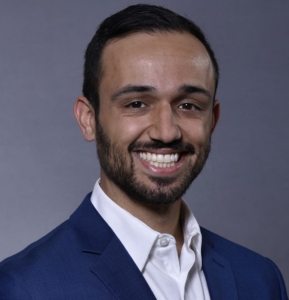 Today, Teeny teaches storytelling in his popular Advertising Strategy course to Kellogg MBAs. He found that marketing brought home “the part of psychology that wanted to leave the lab and bump into real life,” he says. “Ultimately, the 11-year-old who first wanted to understand his neighbors’ oddities can keep asking the same questions – just now with better tools (and an IRB).”
And then there’s Léonard Boussioux, 30, tied for youngest on this year’s list. He is a bonafide quant, studying human-AI collaboration, multimodal systems, and the future of scientific discovery. He’s also as eloquent a poet as Thoreau or Audubon.
Boussioux spends his free time photographing rare birds, orchids, dragonflies, and wildflowers around the world. He dreams of identifying 10,000 species in his lifetime.
He writes poetry in Catalan about sacred mountains. He studies minerals and rainforests “to understand the secrets of color, sound, smell, and the deep, patient intelligence of nature itself.” He reads field guides, encyclopedias, and atlases before bed.
He’s a poet in the classroom, too, teaching generative AI and machine learning to MBAs, master’s students, and executives.
“I love seeing the wonders my students create, hearing about their successes and their stories, getting to know so many lives year after year, following them, and knowing that I get to be part of their path,” he says.
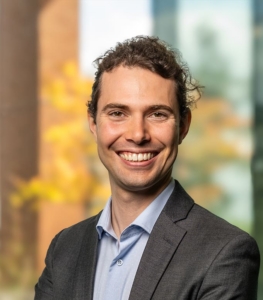
“There is something magical about meeting students: you witness their brilliance before anyone else, and sometimes you are the one showing it to them. When they finally see it themselves, it is a treasure that shines in every light.”
His research examines what he calls the “creativity paradox” of AI. While generative AI can improve individual ideas, it may also compress the diversity of ideas generated by groups. In studies involving storytelling, sustainability solutions, and humor, Boussioux and his collaborators repeatedly found that AI often pushes groups toward sameness.
“The implication is sharp,” he says. “The competitive advantage of the next decade will be on combining the strengths of human ingenuity and AI’s superpowers.”
In other words, advantage will require both the poet and the quant.
NEXT PAGE: P&Q’s 40-Under-40 Business Professors of 2026