
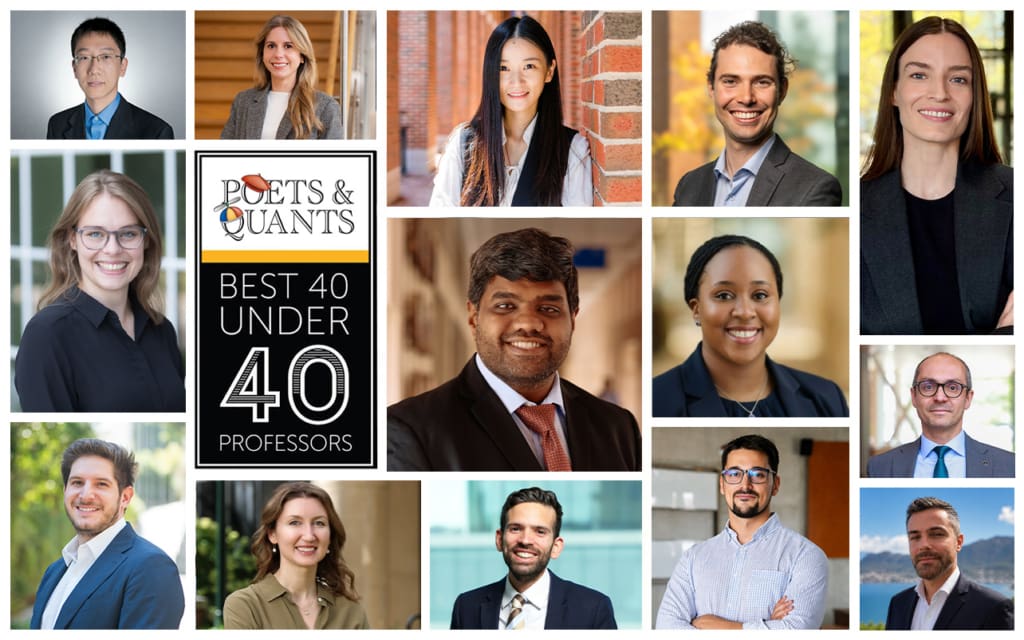
As a professional club player in Spain, Raul Villamarin Rodriguez noticed that the biggest mistakes in a basketball game didn’t come from complicated plays or lack of training. They came from cognitive overload.
Players and teams that could make rational decisions under pressure won. Those who couldn’t lost.
One question stayed with him long after he left the court: How does rationality degrade under constraint?
Today, Rodriguez, 31, is one of the youngest vice presidents of an AACSB and EFMD accredited universities in India. His work examines how institutions, governments, organizations, and AI systems behave under overload, uncertainty, and leadership pressure.
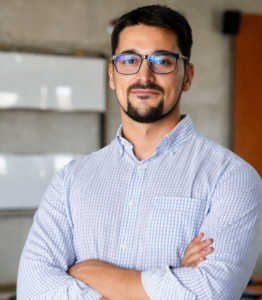 “My most significant finding is embedded in Universal Failure Theory: complex systems do not collapse randomly. They fail through structured cascades involving threshold effects, feedback loops, and the progressive erosion of coordination and metacognitive capacity,” says Rodriguez, Vice President of Woxen University in Hyderabad and the Sir Cary Cooper Professor of Organizational Behaviour at Woxsen School of Business.
“Once you see that pattern, you see it everywhere – in organizational meltdowns, in electoral instability, in aviation near-misses, and in the early warning signals that AI systems emit before they produce catastrophic outputs.”
Rodriguez is one of 40 standout educators featured in Poets&Quants’ 2026 list of the Best 40-Under-40 MBA and graduate business school professors from around the world.
Like Rodriguez, many of this year’s honorees are studying what happens when modern systems are pushed to their limits. Some examine how algorithms distort human behavior. Others explore climate transition, fragile governments, and the future of human creativity alongside AI.
40 PROFESSORS, 38 SCHOOLS, 11 COUNTRIES
Today, P&Q proudly presents the 14th edition of our 40-Under-40 Best Business Professors. After 13 years of honoring up and coming MBA professors, we expanded eligibility for 2026 to include faculty teaching across graduate business programs – from MiMs to specialized master’s degrees to newer programs centered on AI and emerging technologies.
The change reflects how business education and careers are changing. More students are entering the workforce through early-career master programs, and we’ve seen truly innovative teaching and industry engagement happening in the space. We believe this list better captures the breadth of professors influencing the next generation of business talent at every stage, from students launching their first careers to those preparing to lead organizations.
Our goal remains unchanged: to identify and celebrate the most talented professors under the age of 40 currently teaching in management education around the world.
The professors selected for 2026 represent 38 different business schools, including 14 schools outside of the United States. The United Kingdom has three professors on the list, while Canada, India, and Switzerland each have two. Professors from Denmark, France, Germany, South Africa, and Spain are also featured.
Our list reflects the continued globalization of business education, even as some countries and institutions turn increasingly inward.
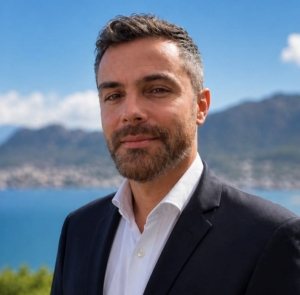 Take Camille Meyer, 38, Associate Professor of Social Innovation and Entrepreneurship and Director of the Executive MBA at the University of Cape Town Graduate School of Business. Born in Europe and now living in South Africa, Meyer studies how innovation, sustainability, and how artificial intelligence can be designed for collective benefit instead of concentrated control.
One of his current projects focuses on Abalobi, a social enterprise helping small-scale fishing communities enter formal seafood supply chains through digital tools.
“One of the most exciting insights is how digital innovation can enhance socio-economic inclusion while simultaneously supporting ecological regeneration. It’s a powerful example of how the use of technology can assist in serving both society and the planet,” Meyer tells P&Q.
“I’m grateful for the opportunity to live in Africa. Its cultural, social, and economic richness has been a transformative experience. The continent’s energy, opportunities, and people have broadened my worldview, offering new perspectives that complement my time in Europe, Latin America and North America.”
HOW WE PICKED THEM
For 2026’s list, P&Q received more than 1,700 nominations from business students, colleagues, administrators, and professors themselves. Our editorial staff evaluated each nominee on teaching (given a 70% weight) and research/business impact (given 30% weight).
For teaching, we considered both the quality and quantity of nominations received. A professor who received dozens of thoughtful, detailed nominations generally scored more highly than one who received a large volume of less substantive submissions. We also considered teaching awards and other evidence of classroom impact.
For research, we examined the volume and influence of each professor’s scholarly work, including Google Scholar citation counts, publication records, media coverage, grants, awards, and demonstrated influence on business practice, public policy, or society more broadly.
Increasingly, we found ourselves drawn to professors whose work extended beyond academic journals and into the systems shaping everyday life.
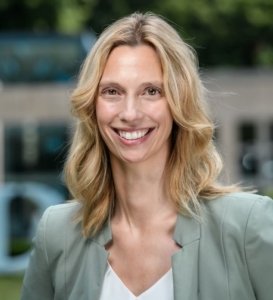 Julia Binder, for example, is trying to move sustainability conversations beyond abstract commitments and into operational strategy.
“My work is about making circularity real. Not as a feel-good corporate commitment, but as a genuine business strategy,” says Binder, 38, Professor of Business Transformation and director of IMD Business School’s Center for Sustainable and Inclusive Business.
“Circularity isn’t something you do because it’s responsible. It’s something you do because it makes business sense. It makes you more resilient, more competitive, and less exposed. With geopolitical volatility reshaping global supply chains, that argument has never felt more urgent or more obvious.”
Binder was named a World Economic Forum Young Global Leader in 2025 and was featured on the Thinkers50 Radar list in 2022.
NEXT PAGE: The Next Generation of Big Thinkers + The Poets And The Quants