
SELLING DIRECT NEVER GOES OUT OF STYLE
This year’s class also features several Disruptive MBA Startups tethered to the sciences. In his AgaveTex venture, Ander de Olloqui, a graduate of Vanderbilt University’s Owen Graduate School, creates industrial grade fibers and yards using agave leaf waste from tequila production. Wild Genomics was started out of the University of California-San Diego’s Rady School by Eirik Torheim. Using biomonitoring, it samples the air to identify pests and weeds before they can damage crops. Operating in the mining space, Harvard Business School’s Voluna connects tiny nuclear sensors to ground and aerial platforms to supply explorers with real-time data to help them identify mineral concentrations. At Northwestern University’s Kellogg School, Neha Mehta and Catherine Malloy joined forces to develop Rora, a “hydrating spray designed for ultra-sensitive vulvar skin.”
“We founded Rora after hearing countless women describe how menopause symptoms, particularly vulvar dryness, disrupted their daily comfort, confidence, and sense of self, yet were rarely discussed or treated seriously,” explains Mehta. “Despite affecting more than half of menopausal women, there were no products that felt designed with dignity or empathy in mind. Deeply passionate about women’s health and consumer innovation, we saw both a personal calling and a market gap: women deserve products that honor their needs without shame.”

Benjamin Foote (with Paige), University of Virginia (Darden)
The same could be said for Noogs, a gummy chew sports nutrition product that emphasizes taste. Developed by a registered dietitian, running coach, and marathon runner, Noogs were “formulated to be soft and easy to eat during exercise” – all while providing the necessary carbohydrates and electrolytes. Not only did the product deviate from the market, but so did its branding, says Benjamin Foote, a 2025 graduate of the University of Virginia’s Darden School.
“When we researched the market, we realized that much of the sports nutrition category prioritized function over taste and leaned heavily on serious, aspirational branding. There was a clear opportunity to disrupt the space with a product that delivered both function and fun, especially as more “party pace” athletes and socially driven marathoners were looking for fuel that matched the fun and community-oriented spirit of their training.”
For Foote, Noogs has been a family affair, with the Darden School welcoming his wife, a co-founder, to the MBA program’s various workshop, pitch events, and incubator programs. More than that, it has plugged them deeper into the recreational athletic community they know and love.
“We are now in 100 stores, have raised over one million dollars, and have traveled around the country introducing athletes to Noogs,” says Foote. “However, our biggest accomplishment has been meeting and selling to over 100,000 endurance athletes. Almost every weekend we attend local races, specialty stores, or running club events, and once a month we participate in major expos with 20,000 to 50,000 participants. We set up a booth, hand out samples, and sell directly to thousands of athletes at a time.”
SOLUTION INFLUENCES A $150-MILLION DECISION
Other startups notched similar achievements. After finishing his first year at Notre Dame’s Mendoza College, Dody Eid’s TriviaLinked product was named a “Top Mobile Game of 2025” by Pocket Gamer Magazine. Similarly, Northwestern Kellogg’s InstaEnglish ranks among top English-learning apps in Japan and South Korea. By the same token, WorkForceIQ, an AI-powered platform “created by nurses for nurses,” churned out data that proved influential in one health system’s hiring and retention practices.
“Our biggest accomplishment has been piloting our work at Emory Healthcare and seeing it drive meaningful organizational change,” says Omid Razmpour, an RN and PhD who’ll finish his MBA at Emory University’s Goizueta School this spring. “By connecting workforce data with financial and operational metrics, our work has helped leaders understand the true cost of nurse turnover and where investments would have the greatest impact. That analysis contributed to Emory Healthcare’s decision to invest $150 million in its nursing workforce, including pay adjustments, reducing reliance on contract labor, and improving overall workforce stability.”

Sergi Rivera Morcillo. IESE Business School
At IESE Business School, Sergi Rivera Morcillo won the 2025 Spanish Naval Entrepreneurship Award for his Whale Dock venture, a ship lifting, repair and maintenance startup. This award, along with a $360K grant from the Spanish government, will enable Rivera Morcillo to fund its 20-tonne-lifting prototype. HonestDeed a FinTech banking platform launched out of the University of Michigan’s Ross School, has already lined up $200-million in contracts. Not only that, but it has also drawn $1.25-million in funding.
In the case of Pipelign Software, founder Greg Van Aken believes his biggest achievement has been his openness to pivot. “I recogniz(ed) the need to change direction early and act decisively on customer feedback. Based on what I was hearing from customers, I made the difficult decision to refocus the company around an entirely new initial product,” writes Van Aken, a ’25 alum of Babson College’s Babson Graduate School whose solution caters to product development alignment. “In a few short months, I built a new MVP, rewrote the business plan, successfully pitched the new direction to prospective customers, and onboarded our first pilot user.”
OBSTACLES APLENTY IN LAUNCHING AND SCALING A BUSINESS
Despite false starts and wrong turns, these MBA founders eventually found their niche. At INSEAD, Amit Zaidenberg De Castro Identified a crack in the white-hot solar energy market. After rooftop systems are installed, nearly half are eventually abandoned due to high maintenance and poor service. As a result, solar firms leave money on the table with lost upgrades and referrals. In response, he formed Gadi.ai, an AI agent that monitors systems and proactively tackles issues “after the rooftop panels go up.” This customer support mentality also fuels Maxwell & Schweighauser, a music advisory firm that helps artists recoup missing royalties using data-driven analysis of catalogs.
“The company was born from a personal discovery when one of our co-founders realized his own grandfather had been underpaid for his contributions to iconic records — including the Kool & the Gang catalog,” explains co-founder Matthew Maxwell, a 2025 MBA graduate from UCLA’s Anderson School. “That experience revealed a widespread gap in knowledge and access for many families tied to creative legacies.”
Like entrepreneurs before them, the founders of this year’s Most Disruptive MBA Startups faced daunting obstacles in getting their ventures off the ground. Before Sakshi Nag racked up $1.8-million in investment for Rayni at the Booth School, he and his cofounder struggled to create an urgency around their problem – the need to keep scientific instruments fully working. Like many co-founders, Cambridge Judge’s Annie Wang faced doubts after continually hearing “no” around her Kalavai solution, which uses the cloud to “make enterprise AI simple and affordable.” Over time, Greg Van Aken felt beaten down over wearing both the technical and business hats. That said, Shiv Panjwani experienced an entirely different issue as a student-founder at Carnegie Mellon University’s Tepper School. A consultant with an engineering background, Panjwani needed to gain credibility with technical talent.
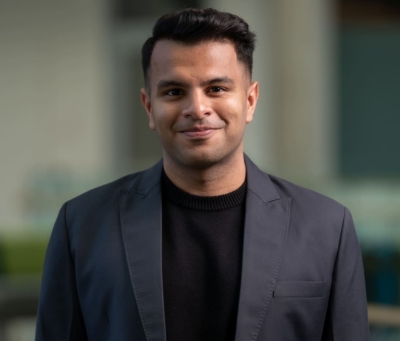
Shiv Panjwani, Carnegie Mellon (Tepper)
“CMU has some of the best engineers in the world, and they want to work with founders who can speak the language, understand product depth, and make real technical decisions, writes Panjwani, whose Agilow AI solution is designed reduce meeting and messaging overload among software developers. “To solve this, I rebuilt my technical foundations from scratch. I took AI-driven classes, joined hackathons, and immersed myself in Pittsburgh’s AI community. I focused on learning modern tools, understanding the architecture behind our product, and showing engineers that I was willing to do the work.”
As always, there is the never-ending struggle to onboard the right team and curate the right culture, says the Booth School’s Joseph McDonald.
“In the early stages, we had a strong idea and deep technical foundations, but not yet the right mix of people to execute together. Finding individuals who not only had the expertise but also shared the same vision, urgency, and mission took time – it meant many difficult conversations, sleepless nights, mismatches, and a lot of patience. But gradually, the right team members came together – members motivated by the problem, committed to solving it collaboratively, and invested in each other’s growth.”
THE BENEFITS OF BUSINESS SCHOOL
More than that, founders like McDonald enjoyed a safety net in the form of their business schools. Coming from a technical and operational background, Adi Prasad points to Harvard Business School filling the gaps in everything from financial modeling to storytelling to organizational leadership. Even more, he adds that Harvard’s brand “opened doors to capital, talent, and credibility” for his startup. Shiv Panjwani echoes these sentiments, observing that an MBA gives entrepreneurs “an unfair advantage” by virtue of coursework focusing on business fundamentals that teach students to think about their business as a whole and not just the product. More than that, he adds, it provides student-entrepreneurs with access to mentors, founders, and experts – not to mention an elite network.
“I found my co-founder by putting a flyer in the Swartz Weekly Bulletin,” Panjwani continues when looking back on his two years at Carnegie Mellon’s Tepper School. “When I was stuck on my first product demo, a founder friend at Swartz sat with me and helped me get through the technical issues. Innovation Scholar and Swartz EIR, Matt Spettel, introduced me to our first investor. Moments like this kept the company moving when it mattered most…. The Swartz Center even gave our team garage space, which became our first real office. Having a place where we can host investors, customers, and potential hires without worrying about rent has been a huge advantage.”
If anything, business school forces entrepreneurs to spend their time where it will get the most impact – and never settle for initial impressions. That was certainly the big takeaway from Cornell Tech’s Startup Studio course, says Chansam Kim Johnson.
“It forces you to test your idea with real users, refine your story every week, and move quickly from concept to product. The biggest lesson I learned was the importance of constant validation; talking to customers early and often is what creates real momentum.”
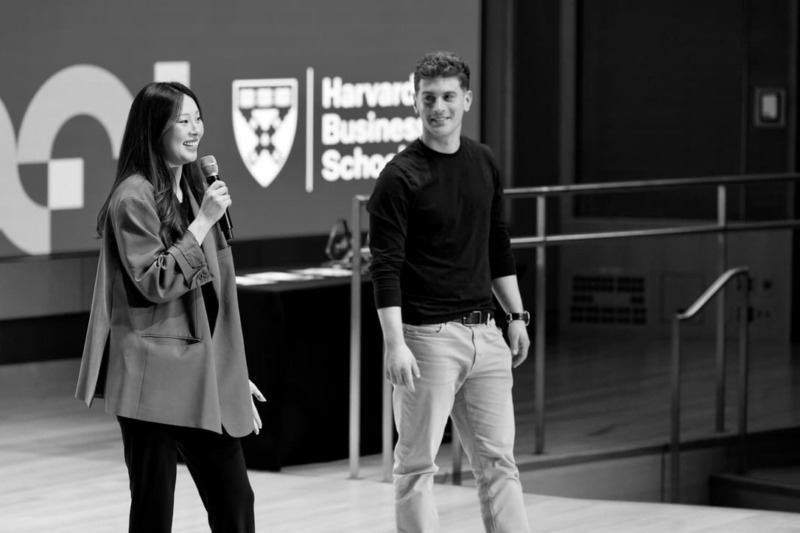
Lisa Yan and Drew Borinstein, Harvard Business School
GETTING BY WITH A LITTLE HELP FROM CLASSMATES
That momentum is amplified by interacting with fellow entrepreneurs in the class, says MIT Sloan’s Clyde Anderson. “Many of our classmates were working on their own ventures, and these people became the most important source of inspiration, collaboration, and comfort. Building a company is hard. It requires making difficult decisions constantly with limited information. Knowing that we were not alone – having dozens of classmates feeling the same pain – allowed us to keep moving forward in the most difficult moments.”
Drew Borinstein and Lisa Yan, cofounders of Argus Systems at Harvard Business School, frames the classmate dynamic in terms of their cohort in the Founder Launch course at Harvard Business School.
“Out of our initial cohort of ~25 teams, the majority of us have gone on to raise institutional funding exceeding $60 million, highlighting the strength of the shared founder experience and entrepreneurship presence at HBS.”
For some MBAs, business school changed their entire way of thinking. Just ask Samuel Stein, who co-founded Cold Cycle Coffee alongside two classmates at the University of Texas’ McCombs School. “The MBA program helped me to move from an engineering mindset, where risk is not tolerated and disclosed in painful detail, to a business mindset, where risk is celebrated and accounted for in models, tests, and multipliers.”

Mike Sanchez, MIT (Sloan)
BIGGEST CLASSROOM TAKEAWAYS
That mindset is hammered home in entrepreneurship coursework, where students absorb unforgettable maxims like “Cash is more important than your mother” (Chicago Booth) or “Startups often fail not because of lack of ideas, but because of lack of focus” (Columbia Business School). More than anything, entrepreneurship courses Like MIT Sloan’s Building An Entrepreneurial Venture (GSD) keep MBA founders from drifting.
“The class put us in a room with other founders of startups at a similar stage and paired us with experienced mentors who did not hesitate to challenge us,” says Mike Sanchez. “The biggest lesson from GSD was the power of structured accountability: showing up every week with real metrics, real customer conversations, and real progress. It forced us to turn “good ideas” into concrete experiments, and then into a real business.”
Those classroom lessons are balanced with over-and-above support from faculty. Clyde Anderson also completed the GSD course at MIT Sloan. Here, Anderson received an unpleasant truth from Professor Kosta Ligris. After Anderson’s team presented their solution, Ligris warned that they were trying too much and stretching themselves too thin. It was an epiphany that laid the groundwork for GrowthFactor’s success.
“We took that advice to heart immediately,” Anderson tells P&Q. “That same night, we worked until 3 AM at the MIT Martin Trust Center to execute a formal pivot, shedding our consulting services to go all-in on a unified brick & mortar real estate platform. Since that moment, Kosta has remained involved and supportive of our business, and was critical to our ability to actually focus. Without Kosta’s continued support, we would not be where we are today.”
BIRD-DOGGING THE METRICS WITH THE “KPI DEMON HUNTER”
That wisdom comes from hard research data – and real-world experience. At New York University’s Stern School, Julian Ozen, co-founder of the Magic Sheet game sharing app, notes that students can take the Venture Building for Entrepreneurship course from Professor Geoffrey Schwartz, the chief strategy officer at Frog. The same goes for Stern’s Managing a High-Tech Company course. It is taught by Professor Rim Ji-hoon, who once ran Kakao Corp, one of South Korea’s largest tech companies. For Ozen, these were once-in-a-lifetime experiences to tap into an insider’s perspective on how to build and maintain successful enterprises.
“[Ji-Hoon] shared firsthand leadership lessons from managing a 3,000-person company: how to approach hiring, reward top performers, start or shut down initiatives, and navigate complex negotiations. From this course, we learned how to balance rapid technological shifts with the human and structural realities of growing a business.”
Sometimes, MBA founders just needed a taskmaster. And the Kellogg School’s Troy Henikoff – nicknamed the “KPI demon hunter” by Yutaro Nishiyama – was happy to oblige. “Every week, he pushed every team to answer, “What will you do this week to move the needle?”, Nishiyama continues. “There was no hiding behind long-term roadmaps. This intense focus on immediate, measurable progress forced us to prioritize what truly matters and was fundamental to getting our business moving so quickly.”
Next Page: Profiles of 40 Disruptive Startups from Stanford GSB, Wharton School, and Northwestern Kellogg.