

The MBA candidate pool is larger this year and more diverse, says GMAC’s Adam Witwer, head of
For more than 15 years, the Graduate Management Admission Council’s annual Prospective Students Survey has been capturing how prospective graduate management education students think.
Year after year, these surveys showcase what prospective students value and how they weigh one of the biggest decisions of their careers – and lives. This year’s survey reveals that candidates are approaching this decision with sharp instincts and clearer priorities than ever before.
GMAC gathered responses from 4,253 candidates across 145 countries; nearly half were women. A solid 27% of respondents also identified as underrepresented in the U.S.
Participants were those who were sourced from GMAC platforms like mba.com and partner organizations like Forté Foundation and Beta Alpha Psi, with most planning to enroll in GME within the next two years.
THE MOST PROMINENT FINDINGS
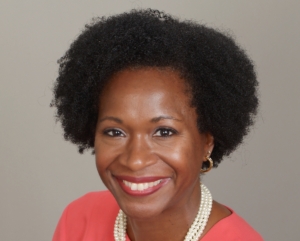
Joy Jones, GMAC CEO: “When building new strategies, business schools should factor in the elasticity of evolving patterns in global student mobility”
This year’s survey found that interest wasn’t necessarily changing, but the intent behind pursuing graduate education was.
Candidates are still drawn to GME, but they’re no longer chasing broad, abstract notions of transformation. They want specifics.
Students are asking themselves questions like, What skills will I gain? What job will this lead to? How quickly will it pay off?
It’s evident that strategy matters the most to this year’s prospective GME students, and this can be seen earlier than ever this year. For schools to stay competitive, this creates a new challenge. If they want to stay at the top of a candidate’s list, they’ll likely need to deliver meaningful pre‑experience resources that set the stage early.
Programs that can clearly connect the classroom experience to actual roles, salaries, and day‑to‑day life are far more likely to stay in the running. Those that can’t risk losing candidates before the conversation even begins.
Even in the exploration phase, candidates are asking tougher, more practical questions about cost, time, and risk.
“The direction of the future candidate pipeline is being reshaped by what, how, and increasingly where prospective students choose to study,” says Joy Jones, CEO of GMAC. “When building new strategies, business schools should factor in the elasticity of evolving patterns in global student mobility … at the same time, candidates are becoming ever more disciplined in how they assess return on investment.”
THE RISING INTENTIONALITY FOR WOMEN IN GME
For women pursuing graduate management education, selectivity was especially visible this year. There’s been a decline in women applying to full‑time MBA programs compared to just a few years ago.
To gain more insight, we spoke with Andrew Walker, director of industry communications at GMAC, has been tracking these patterns closely since early 2023.
“What we’re seeing is a combination of economic factors and program preference shifts converging,” Walker explains.
At first glance, fewer applications might raise eyebrows, but look closer and you’ll see that the ones that are applying have far more intention behind each choice. “Women report a higher cost sensitivity compared to men, which can amplify existing structural access barriers,” Walker says. That shows up not only in how candidates think about tuition, but in how carefully they build their school lists. The scattershot approach is fading.
That same sense of intention is reshaping what specific areas of study candidates are pursuing. “In the U.S., interest in Master of Accounting programs has grown significantly from 4% in 2023 to 19% today,” Walker notes.
HOW CANDIDATES ARE REWRITING THEIR DEGREE CHOICES

Andrew Walker, director of industry communications at GMAC: Trends “point to a need for more intentional program design and clearer value propositions”
Candidates are selecting degrees that fit their individual career goals, so while the MBA remains a strong and respected option, it’s simply not the right fit for everyone anymore.
There’s also the matter of program format. Full‑time, in‑person programs remain popular overall, but the gender gap has widened in a standout way.
“From 2024 to 2025, women’s preference for full‑time, in‑person programs declined by 4% while men’s increased by 4%,” Walker says. “It’s the widest gap we’ve seen in at least seven years.”
The return‑to‑office push has also seemed to deter some women from pursuing a path that may lead them to an in person office job. “While there is now a broader return to in‑person environments, that shift hasn’t affected all candidates equally,” he says.
The global map of demand is shifting as well. Younger candidates lean toward full‑time, in‑person study, while most candidates over 40 prefer alternative delivery methods. Indian candidates are the most likely to want a full‑time, in‑person experience, while South African candidates are the most open to flexible formats.
DEMAND FOR GME IS STILL THERE – WITH NEW REQUIREMENTS
Looking from the outside in, this can make the current GME market feel more dynamic and more competitive than ever.
Demand for both MBA and business master’s programs remains strong, but candidates are thinking about what path will give them greater clarity and purpose. They are comparing options more carefully, asking better questions, and expecting stronger answers.
For business schools, standing out now seems to require relevance and programs that show exactly what students will gain, how those skills translate into careers, and why the investment makes sense.
“These trends point to a need for more intentional program design and clearer value propositions,” says Walker.
DON’T MISS 5 BIGGEST SURPRISES IN THE NEW GMAC PROSPECTIVE STUDENT DATA and GMAC’S BLUNTEST SURVEY YET: U.S. LOSING GLOBAL TALENT, CANDIDATES WANT PROOF NOT PROMISES
The post Parsing The Data: B-School Candidates Redefine Their Path Forward With New Intentionality appeared first on Poets&Quants.