

‘I came into HBS with deep technical and operational experience from Tesla, Apple, and Rivian, but I lacked many of the business tools needed to build and scale a venture from the ground up. HBS filled that gap and accelerated every dimension of the company.’ – Harvard Business School MBA Adi Prasad, founder of Matter.
THE ENDURING ENTREPRENEURIAL POWER OF STANFORD AND HARVARD
Two schools continue to dominate our annual list, both in number of MBA startups and in total capital raised. Together, the account for 65 out of the 100 companies on the 2026 list and $2.78 billion of the total money raised.
But this year, HBS edged out Stanford GSB for the highest number of startups with a score of 36.5 to 28.5. Plenna (No. 76) was founded by an MBA from both schools – HBS’ Giovanna Abramo and Stanford GSB’s Lorena Ostos Rangel – so we gave each school half the credit in both number and total capital raised.
The founders worked together at Bain & Company where they shared an interest in women’s health in Mexico. Abramo began researching women’s health startups during a pre-MBA internship and saw an opportunity to address gaps in reproductive and sexual healthcare back home. She and Ostos began developing Plenna as a women-focused healthcare company combining digital services with physical clinics. The company has since raised $12.14 million.
HBS’ MBA startups also raised more from angel investors and venture capitalists over the last five years compared to Stanford, $1.71 billion to GSB’s $1.07 billion. (For 2025’s list, Stanford’s startups earned more, $1.19 billion to HBS’ $806 million.)
Looking at other schools represented, Columbia Business School has 10 schools raising a total of $329.43 million and UC Berkeley Haas School of Business has 4 startups raising a total of $411 million.
Four other schools landed three startups a piece on the list: The Wharton School (raising $379 million), Northwestern University Kellogg School of Management ($172.10 million), INSEAD in France ($55.89 million), and Cambridge Judge ($57.3 million).
THE ECOSYSTEMS BEHIND THE STARTUPS
The entrepreneurial strength at Stanford GSB and Harvard Business School shows up in a range of companies.
At HBS, Matter reflects the surge of interest in industrial AI and advanced manufacturing. The company was founded by 2025 HBS MBA Adi Prasad after nearly a decade working on gigafactories and automated production lines. Matter is building what Prasad describes as an AI-native contract manufacturing network, with software-defined factories that combine design, procurement, automation, quality control and factory operations through a single operating system. The company is targeting advanced manufacturing in areas such as robotics, energy systems, defense hardware, consumer electronics and AI infrastructure.
“I came into HBS with deep technical and operational experience from Tesla, Apple, and Rivian, but I lacked many of the business tools needed to build and scale a venture from the ground up. HBS filled that gap and accelerated every dimension of the company,” Prasad told P&Q in his 2025 Most Disruptive MBA Startups feature.
“I met key advisors, investors, and even early customers through the HBS ecosystem. Entrepreneurship courses, Rock Center programs, and faculty mentorship all played pivotal roles—helping me refine the narrative, sharpen strategy, pressure-test our business model, and ultimately raise a large seed round with conviction. HBS didn’t just support the venture – it accelerated it.”
The MBA helped fill in the company-building skills he lacked, from financial modeling and go-to-market strategy to sales, storytelling and organizational leadership. Courses including The Founder’s Mindset, Launching Tech Ventures and Tough Tech Ventures, along with HBS’s Rock Center and faculty mentors, helped him refine Matter’s strategy and fundraising pitch. He was also able to recruit a world-class founding team from Tesla, Rivian, Apple, Google, and Intel.
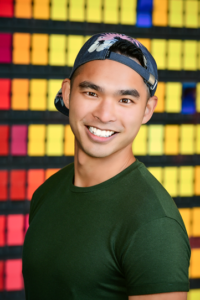
Joshua Yang, Glyphic (Stanford GSB)
Glyphic Biotechnologies, meanwhile, illustrates Stanford’s strength in biotech and deep tech. Founder Joshua Yang signed up for Nucleate Bio, a program built around matching potential biotech co-founders, but missed its mandatory speed-dating event while traveling the Road to Hana in Maui with GSB classmates. One participant reached out anyway. That person, Daniel Estandian, eventually became his co-founder.
Glyphic is developing a single-molecule protein sequencer designed to give researchers a much deeper look at proteins, with potential applications in drug discovery, diagnostics and basic biological research.
“I can objectively say that without the Stanford GSB MBA program, this startup wouldn’t even exist,” Yang says in his 2021 Most Disruptive MBA Startups feature.
Classmates helped with investor introductions, professors advised him on term sheets and board structure, and the flexibility of the MBA curriculum allowed him to fundraise while still in school. Courses in venture capital, entrepreneurial finance and corporate financial modeling also gave him practical tools for navigating fundraising and building the company’s financial plans.
“It felt like everyone wanted to do entrepreneurship at the GSB, with so many fellow classmates forming startups with each other. This collaborative culture and entrepreneurial environment made it so that there was no absence of resources and advice, from logistical questions about how to actually start a company to the more nuanced questions of term sheet negotiations.”
NEXT PAGE: 23 Startups Co-founded by Women