
Imagine you’re a marketing student – a fellow at a business school. You’re sitting in a small group with a professor, deciding which questions some of the world’s top marketing leaders should answer. You debate what’s worth asking, dig into the responses, build graphs to spot trends and talk through what the data actually means – all alongside the professor who created the research.
A few months later, executives, academics and the broader business community are citing that research. And not just online somewhere – in your own classroom. You and your classmates are referencing work you helped create. What you were part of has already made an impact.
A FELLOWSHIP WITH REAL-WORLD REACH
That’s what makes the fellowship tied to The CMO Survey at Duke University’s Fuqua School of Business so distinctive. Fellows study how marketing leaders think and turn real-world data into insights that executives and academics have relied on for years.
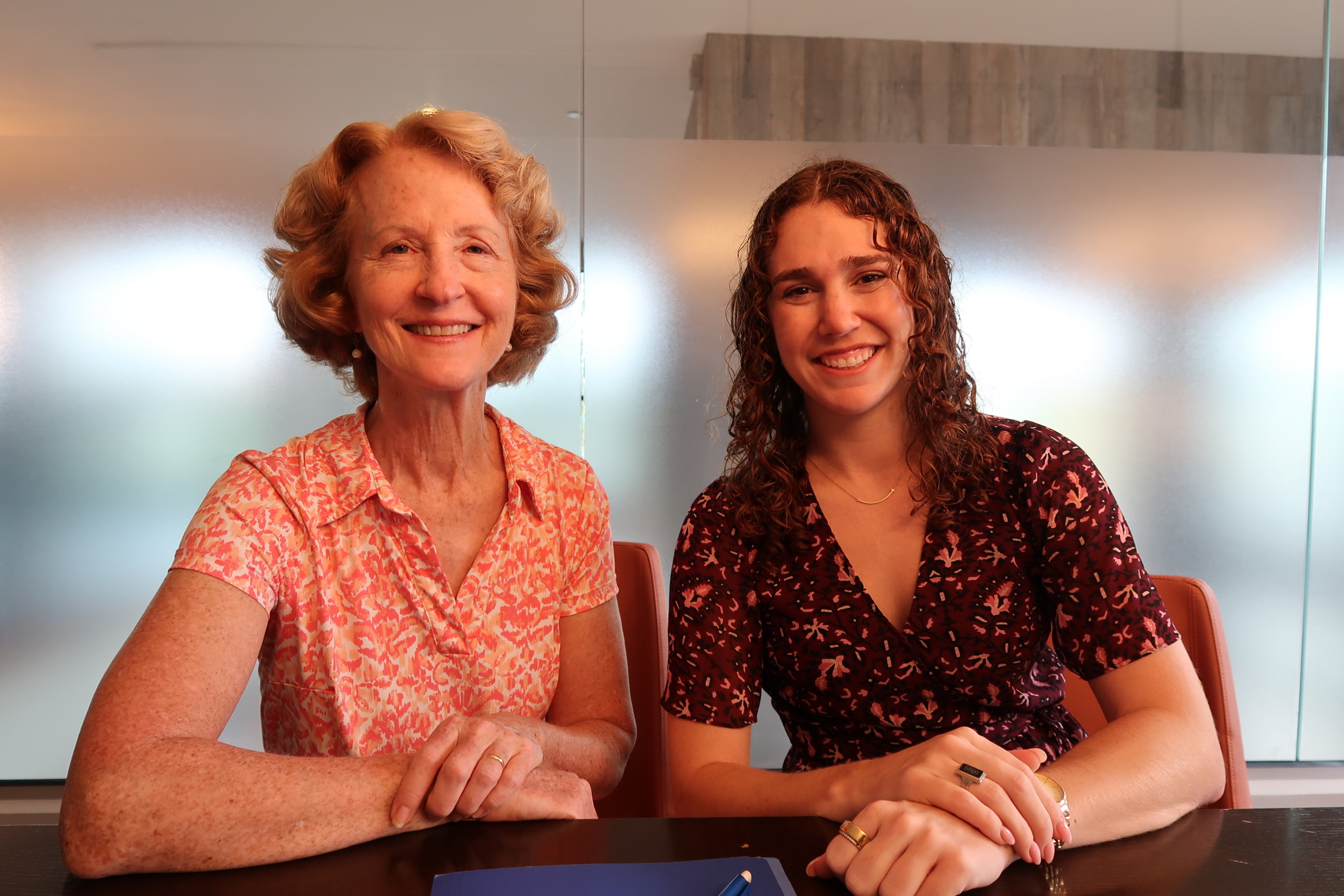
Christine Moorman, the Fuqua professor behind the survey, launched it in 2008 with a simple goal – to demonstrate the value marketing brings to business. “I just thought, well, what can I do to advocate for this field? So I launched the survey.”
With each wave of data, Moorman and her students have built a longitudinal record of how marketing has evolved. The survey has captured major shifts across the field, from social media and digital transformation to AI and changing expectations about marketing’s role in business.
What sets the fellowship apart, Moorman says, is that students aren’t simply handed finished research. “The students are actually going out and helping me gather the information from the practitioners. In this way, this is quite unique,” she says.
The fellows are paid and work alongside Moorman throughout the research process, helping identify which marketing leaders to target, develop survey questions and interpret the findings. “The whole value of the survey depends on the quality of the questions that we ask,” Moorman says, “and my students are helping create those.”
FROM DATA TO DECISIONS
That level of involvement pushes the fellowship beyond traditional research and closer to real-world strategy work. “They help me write the reports with the highlights and insights that require that we take the data and create graphs, and we look at it over time,” Moorman says.
That lets them show, for example, how marketing spending has changed over time. And businesses are putting the insights to work. “Companies are looking at the same information, but some are looking for specific trends. They have information that they can use to inform a new product or a new strategy,” Moorman says.
Fellows have even shaped the survey’s direction. During the COVID-19 pandemic, two of them suggested a special issue on how marketing leaders were navigating the sudden shift to digital. “We captured the state of the world at that point in time,” Moorman says.
Today, the same approach puts students at the center of emerging questions around AI. Last year’s survey found that the biggest barriers to AI’s impact aren’t technical. Marketing leaders point instead to challenges around talent, time, budgets and organizational silos.
“Marketing has an AI problem and it has nothing to do with the AI technology itself. It has to do with how people are managing it and resourcing it,” Moorman says.
FROM FELLOW TO THOUGHT PARTNER
Contributing to work like this gives fellows tangible proof that they can analyze complex data, think strategically and turn insights into something useful.
Elise Romola, who recently completed her first year at Fuqua, is one of them. The fellowship offered exactly the bridge between classroom learning and professional experience she was looking for.
Romola came to Fuqua with a background in marketing strategy consulting and knew she wanted a marketing internship. She first heard about Moorman and The CMO Survey through a former manager who had interviewed Moorman for his podcast, then encountered Moorman again in one of Fuqua’s required courses.
“I knew that I wanted to pursue an internship in the marketing field, so I felt like this opportunity was something really tangible,” Romola says. “It’s applicable to the industry, the jobs I might want. I was really excited to come on board.”
A year in, Romola says the lasting value has come from seeing the research process through from start to finish – and from having a meaningful hand in work the business community actually uses.
“You really get to see the end-to-end process,” she says. “I’ve been helping to drive research that is important, and I’ve now joined a legacy that has shown over time how marketing has changed.”
The experience has also given her proof that she can handle large volumes of data, parse it and communicate it in a way anyone can understand.
Perhaps most telling, the work makes her feel like she’s already in the field. “It never feels like a job or like a fellowship, and it actually feels like we’re doing something important,” Romola says.
“I’m taking a class this term where the pre-reads are parts of our CMO survey report. It’s amazing that they’re referencing something that I was actually a part of, that I just helped write this. To see the survey get referenced is really special,” she says.
DON’T MISS MEET DUKE FUQUA’S MBA CLASS OF 2027
The post How Duke Fuqua Fellows Shape Marketing Research Through The CMO Survey appeared first on Poets&Quants.